
How Bentonville Became a Bike City: From Bronze to Silver and Beyond
Editor’s Note: This blog was written in partnership with The League of American Bicyclists and also appears on The League’s blog.

Local leaders in Bentonville talk about how committing city dollars to bike infrastructure reshaped the politics of getting projects built.
Project delivery in Bentonville accelerated 15 times the city's historic pace, backed by tens of millions of dollars in aligned local and public investment. Anyone who’s worked for or with local governments knows how impressive those numbers are. What’s more, we’ve learned that achieving these results doesn't require any conditions unique to Bentonville. Just a deliberate approach to building the right coalition, resourcing local champions, and keeping an ambitious timeline.
The First Thing You Build is Your Coalition
The bike infrastructure initiatives that stall usually do so because people think the purpose is to serve cyclists. We’ve learned that when a mobility project is framed primarily as a benefit for one group, it invites opposition from groups favoring other modes of transportation.
Bentonville framed the project as mobility and added safety for everyone, regardless of how you get around. That framing invites in drivers worried about congestion, parents focused on school safety, employers thinking about workforce access, and neighborhood advocates pushing for equity.
As Jeremy Rose, owner of Bike Inn Bentonville, put it: "This is a community that values active transportation, outdoor recreation, and forward-thinking infrastructure." That whole-community mindset enabled the city to build a broad coalition capable of carrying the project across the finish line.
Local Investment, Local Control
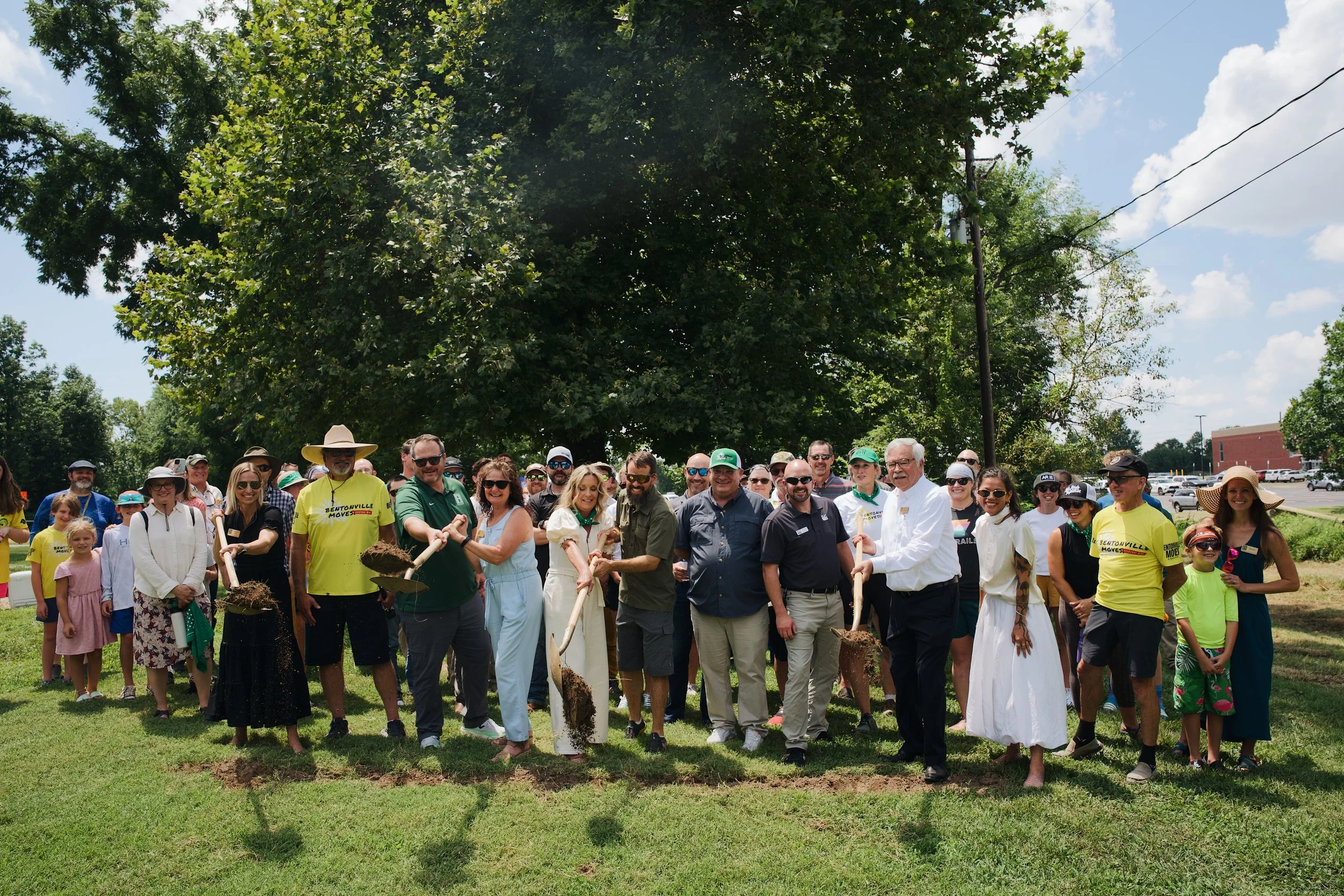
One of Bentonville’s most impactful strategic decisions was to move away from a financial model heavily dependent on a single major philanthropic funder to one grounded in diversified local investment. The city committed $28 million of its own dollars to that effort. That’s a big stake, but it paid off in Bentonville, and we think it’s crucial to success everywhere.
Local investment matters for several key reasons. It gives cities the authority to set their own priorities rather than deferring to outside funders. It creates a stronger case for attracting state and federal dollars, since local investment signals credibility and commitment. And it builds more durable momentum that doesn't collapse when a funding source dries up.
The pattern we see cities repeat across the country is to wait for major philanthropic backing before they move. Bentonville illustrates how, when a city puts its own resources behind a plan, it changes the political dynamics, accelerates decision-making, and indicates to residents and businesses that this is really happening.
Speed is Part of the Strategy
There’s a frustrating tendency in this field to treat slow implementation as a given. The Bentonville coalition was likely as united by its frustration with waiting as by anything else. That shared commitment to keeping a foot on the gas resulted in 30 miles of biking and walking infrastructure in 3 years, at 15 times the historic rate. And it proves how quickly a project at this scale can be completed when the political, organizational, and financial conditions are aligned.
Strategically, speed matters in more ways than just efficiency. Communities need to see results within political and human timeframes to sustain enthusiasm and trust. Early accomplishments build confidence and momentum, and that translates beyond just construction timelines.
Bentonville more than doubled the number of certified Bicycle Friendly Businesses within a year because the infrastructure was built quickly enough to capitalize on the excitement around the project and change how people actually move through the city.

How to Replicate Bentonville’s Success
Every community has its own political dynamics and funding landscape, but the core strategy here can be achieved everywhere. We’ve used this same Accelerated Mobility Playbook (AMP) across the country: align partners, resource local champions, and build at scale, quickly. It works, and Bentonville is just the latest proof.
The path from Bronze to Silver to Gold is feasible for many more cities than they realize. There may be significant challenges in politics, community support, and resources, but these are solvable problems when you bring the right strategy to the table.
--
Sara Studdard is a Partner and co-founder at City Thread, a national nonprofit organization whose mission is to accelerate projects that help people move safely, efficiently, and equitably throughout their communities. A community engagement and communications professional with a 15-year track record of working with people and systems to use their resources for growth and good, Sara’s approach centers on coalition-building strategies that drive positive change.
